Commentary
The centre holds in the European Parliament, and the young vote splits in two
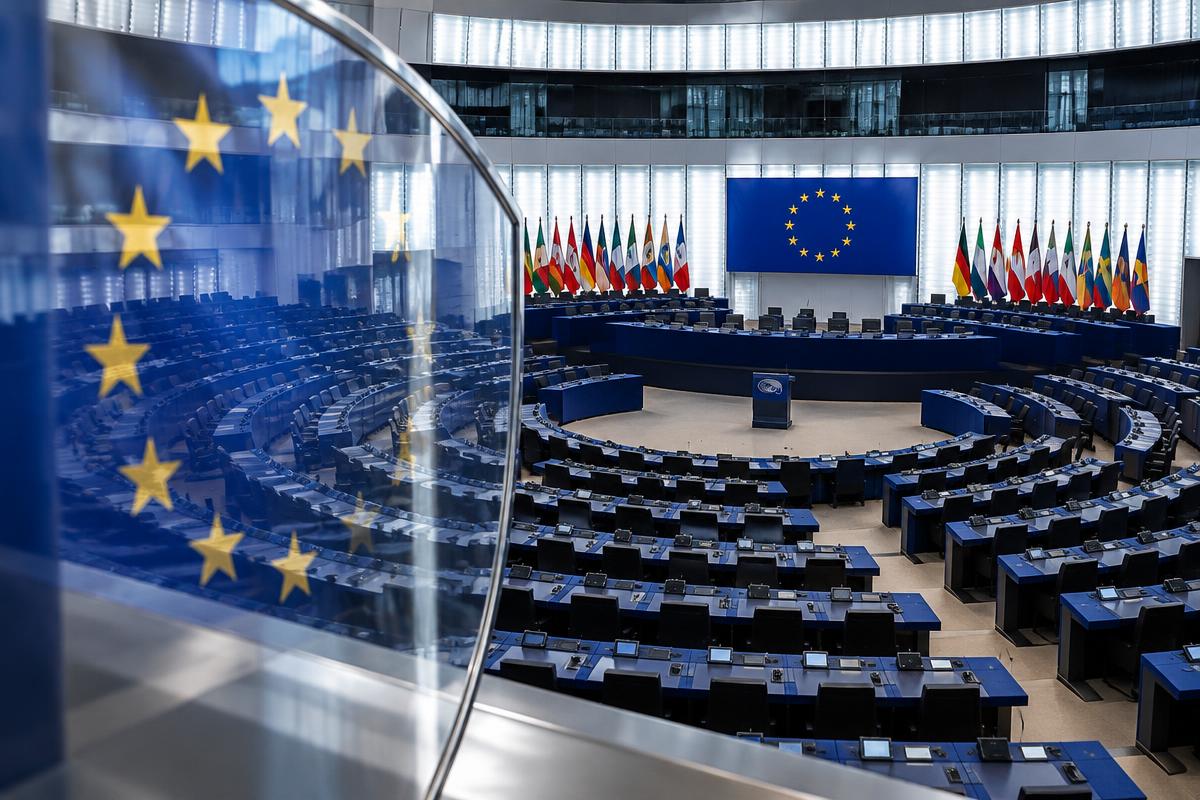
Between Thursday 6 and Sunday 9 June 2024, the citizens of the 27 Member States elected the 720 members of the tenth European Parliament[1]. The provisional projection published on election night gives the European People's Party 185 seats, the Socialists and Democrats 137, Renew Europe 80, the European Conservatives and Reformists 73, Identity and Democracy 58, the Greens 52 and The Left 36. A further 99 seats belong to non-attached members and to newly elected parties that have not yet joined a group[2]. Turnout stood at about 51 per cent, close to the 50.66 per cent of 2019[3]. The three groups that supported the outgoing Commission therefore keep an arithmetical majority of around 400 seats. The Commission President, Ursula von der Leyen, said on election night: "We have won the elections, and we are an anchor of stability"[2]. The figures remain provisional. The Parliament will publish the final results over the coming weeks, and the composition of the groups will change as new members choose their seats[3].
What the national results say
The headline of the night came from Paris. The Rassemblement National list led by Jordan Bardella won 31.37 per cent of the vote, against 14.60 per cent for the presidential majority list and 13.83 per cent for the Socialist list led by Raphaël Glucksmann[4]. About an hour after the first estimates, President Macron dissolved the National Assembly and called legislative elections for 30 June and 7 July[2]. The Renew Europe group loses 22 seats on the provisional count, most of them French[2].
In Germany, the Christian Democrats and the CSU won 30 per cent, the AfD 15.9 per cent, the SPD 13.9 per cent and the Greens 11.9 per cent. The Greens lost 8.6 points against 2019 and the AfD gained 4.9 points[5]. Turnout rose to 64.7 per cent, 3.4 points above 2019[5]. In Italy, Fratelli d'Italia won 24 seats, the Democratic Party rose from 15 to 20, and the League fell from 22 to 8[2]. In Belgium, where federal, regional and European elections were held on the same day, Prime Minister Alexander De Croo presented his resignation to the King on 10 June after the N-VA won 24 federal seats and Vlaams Belang 20[6]. The Patriots and the Conservatives together gain about 13 seats on the provisional count, and the Greens lose 19[2]. The centre holds, but it holds in a Parliament where the right of the hemicycle is larger than it was.
What the age tables say
This election was the first in which 16-year-olds could vote in Germany and Belgium for the European Parliament. The Parliament's own voter information states that eligible voters in Germany must have "reached the age of 16", and that voting in Belgium is compulsory for citizens aged 16 or over[7][8]. The age tables deserve a careful reading. They are exit-poll estimates, not counted ballots, and they will be revised.
In Germany, according to the Infratest dimap exit poll for ARD, voters aged 16 to 24 gave 17 per cent to the CDU/CSU, 16 per cent to the AfD, 11 per cent to the Greens and 9 per cent to the SPD, with 28 per cent going to smaller parties[9]. Five years ago the Greens were the first party among the youngest voters by a wide margin. In 2024, the youngest German voters are split between the Christian Democrats, the far right and a long tail of small lists. In France, according to the Ipsos estimate, voters aged 18 to 24 gave 33 per cent to La France insoumise and 25 per cent to the Rassemblement National; voters aged 25 to 34 gave 30 per cent to the Rassemblement National and 20 per cent to La France insoumise[10]. The two French lists that performed best among the under-35s are therefore the two that sit furthest from the centre.
We draw three conclusions. The first is that the youth vote is no longer a reservoir for the Greens or the liberals. It is contested ground, and in two of the three largest Member States the far right is now one of the two largest parties among voters under 25. The second is that fragmentation among young voters is as striking as polarisation. In Germany, more than a quarter of the under-25s voted for parties outside the seven that will send members to Strasbourg in numbers, and Volt alone rose from 0.7 to 2.6 per cent nationally[5]. The third is that turnout, at about 51 per cent, did not fall despite the campaign's warnings of foreign interference, which suggests that the Parliament's own mobilisation effort reached its target[3].
What the new Parliament should do about it
The Parliament that meets in July will have to decide quickly on the next Commission, and the French election will complicate that calendar[2]. We make four recommendations. First, the new Parliament should commission a Eurobarometer study on the voters aged 16 to 24, by Member State and by source of information, before the end of 2024, so that the age tables rest on a common European survey and not on national exit polls alone. Second, the Member States that allow voting at 16 should publish turnout by age group, because the case for lowering the voting age across the Union depends on whether those voters actually went to the polls. Third, the groups of the centre should treat the fragmentation of the youth vote as a signal: the small lists that attracted young voters, from Volt in Germany to the animal and rural lists in France, raised questions of mobility, housing and representation that the larger parties left unanswered[4][5]. Fourth, the next Commission's programme on democracy and disinformation should include a measurable target for first-time voters, since the voters who entered the electoral roll this year will still be on it in 2029.
Bilješke
Citirajte
Global Policy Centre, "The centre holds in the European Parliament, and the young vote splits in two", Génération Maastricht, 12 June 2024, https://generationmaastricht.org/research/european-elections-2024-results-youth-vote.