Commentary
The AI Act deal: what was agreed on 8 December and what was not
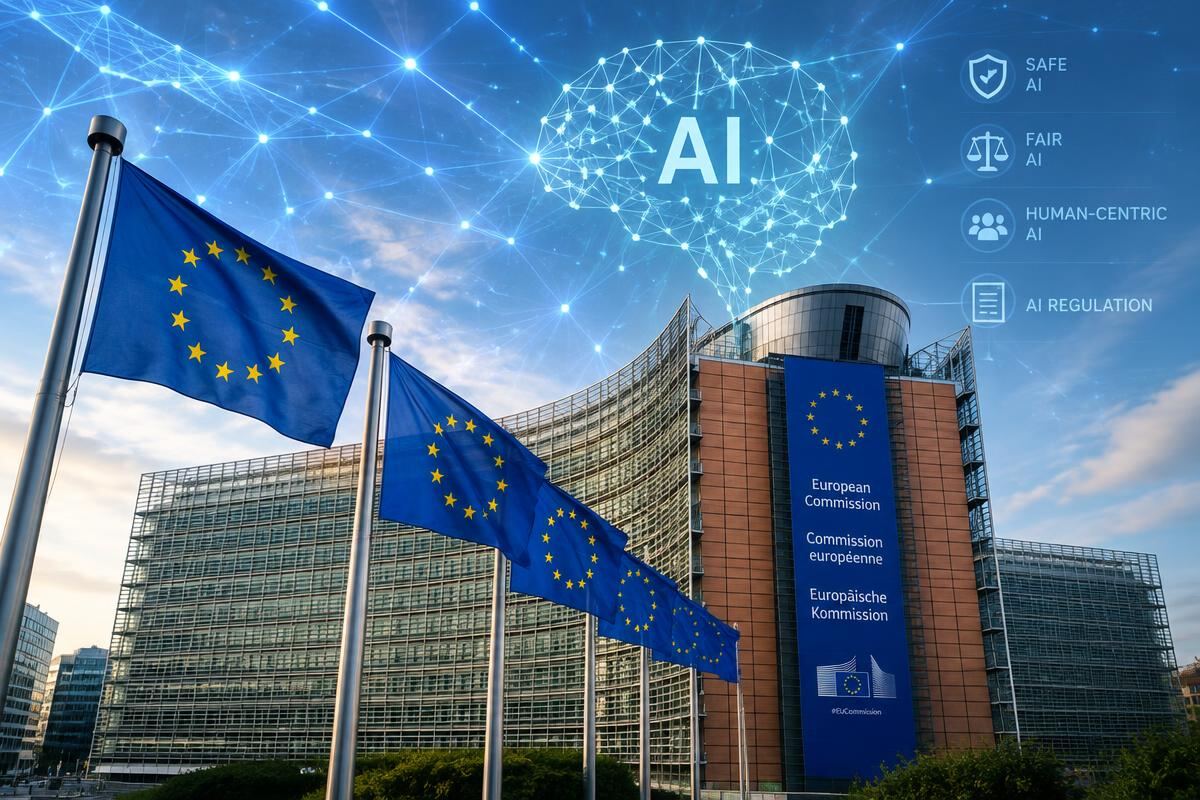
The negotiators of the European Parliament and the Council reached a provisional agreement on the Artificial Intelligence Act late on Friday 8 December, after three days of trilogue in Brussels.[1] The Commission proposed the Regulation in April 2021. The Council adopted its general approach on 6 December 2022.[2] The Parliament adopted its position on 14 June 2023 by 499 votes to 28, with 93 abstentions.[3] The text that will go to the Member States' representatives is not yet public. Our reading relies on the two institutions' own accounts of what they agreed, and those accounts do not stress the same things.
What the deal settles
The structure survives. The Regulation ranks AI systems by the harm they can cause, and the Council sums it up in one sentence: "the higher the risk, the stricter the rules." Systems of limited risk carry transparency duties, such as telling users that content is machine-generated. High-risk systems may be sold in the Union once they meet a list of requirements.[1]
The list of prohibited practices is longer than in either institution's starting position. The agreement bans cognitive behavioural manipulation, the untargeted scraping of facial images from the internet or CCTV footage, emotion recognition in workplaces and schools, social scoring, biometric categorisation that infers sensitive data such as sexual orientation or religious belief, and some forms of predictive policing directed at individuals.[1] The Parliament adds to that list systems that exploit vulnerabilities linked to age, disability or social and economic situation.[4]
Biometric identification is where the Parliament gave most ground. In June it had asked for a full ban on real-time remote biometric identification in publicly accessible spaces.[3] The agreement allows it in narrow cases: searching for victims of certain crimes, preventing a specific and present terrorist threat, and locating persons suspected of a list of serious crimes. The Parliament's account adds prior judicial approval and strict limits of time and place. Post-remote identification is limited to targeted searches for persons convicted or suspected of serious crimes.[1][4]
General-purpose AI is where the Council gave most ground. Its 2022 general approach had deferred the question to an implementing act.[2] The agreement creates obligations for every general-purpose model: technical documentation, compliance with Union copyright law and a published summary of the training content. Models that carry systemic risk, which the Council describes as "high-impact" foundation models trained on very large datasets, must also run model evaluations and adversarial testing, report serious incidents to the Commission, meet cybersecurity requirements and report on energy efficiency.[1][4]
Governance moves to Brussels. An AI Office inside the Commission will supervise the most advanced models, with a scientific panel of independent experts, an AI Board of Member State representatives and an advisory forum.[1] Citizens obtain two rights: to lodge a complaint about an AI system and to receive an explanation of a decision taken by a high-risk system that affects their rights.[4] Fines reach 35 million euros or 7 per cent of worldwide annual turnover for a banned application, 15 million euros or 3 per cent for other breaches and 7.5 million euros or 1.5 per cent for supplying incorrect information, with lower caps for small and medium-sized enterprises.[1]
What the deal leaves open
Three things are not settled by Friday's handshake.
The first is the text. The Council says that technical work continues and that the compromise will go to Coreper for endorsement before both institutions confirm it and the lawyer-linguists revise it.[1] The Parliament says its IMCO and LIBE committees will vote on the agreement at a coming meeting.[4] The sentences that matter for biometrics and for the threshold between an ordinary model and a model with systemic risk will be written in that phase. Brando Benifei, one of the two rapporteurs, said so himself: "Correct implementation will be key."[4]
The second is time. The Council states that the Regulation will apply two years after its entry into force, with exceptions.[1] If the formal adoption takes place in the spring of 2024, the general obligations will bind in 2026. The Commission's own proposal dates from April 2021, before the general-purpose models that the agreement now regulates were on the market.[2] The next generation of models will reach the market before the rules written for the present one apply. Ursula von der Leyen said this morning that "the AI Act transposes European values to a new era".[5] The values will wait two years for their instrument.
The third is the AI Office. The Commission will supervise the largest models in the world with a body that does not yet exist and whose budget and staff the agreement does not describe.[1] The object of supervision changes with every training run.
We think the agreement is good for our generation on three points and incomplete on one. The bans on emotion recognition in schools and workplaces, on facial scraping and on biometric categorisation protect the people who will spend their working lives under these systems.[1] The right to an explanation gives a person refused a loan or a job by a model a legal handle.[4] The training-content summary makes the models' debts to authors visible.[4] The incomplete point is biometrics. The exceptions are narrow on paper, and the list of crimes will be written in a technical phase that nobody outside the institutions can watch.
We make four recommendations.
First, the Parliament should publish the consolidated text as soon as Coreper endorses it, before the committee vote, so that the biometrics exceptions and the systemic-risk threshold are read in public before they become law.[1][4]
Second, the Commission should present, with the formal adoption, a staffing and budget plan for the AI Office and a timetable for the scientific panel. A supervisor announced without means is a promise, and the Act needs an authority.[1]
Third, the Member States should designate their national supervisory authorities within six months of entry into force and give them the technical staff that complaints about high-risk systems will require. The right to complain is worth what the authority that receives the complaint can do.[4]
Fourth, the Commission should ask the providers of the largest models to apply the general-purpose obligations voluntarily from the date of formal adoption. The documentation, copyright and training-summary duties cost nothing to anticipate, and a two-year gap on a technology that moves in months is too long.[1][4]
Jegyzetek
Hivatkozás
Global Policy Centre, "The AI Act deal: what was agreed on 8 December and what was not", Génération Maastricht, 11 December 2023, https://generationmaastricht.org/research/ai-act-deal-what-was-agreed-and-what-was-not.