
Brief
The 2026 Enlargement Package: the roadmaps for Montenegro, Albania, Moldova and Ukraine
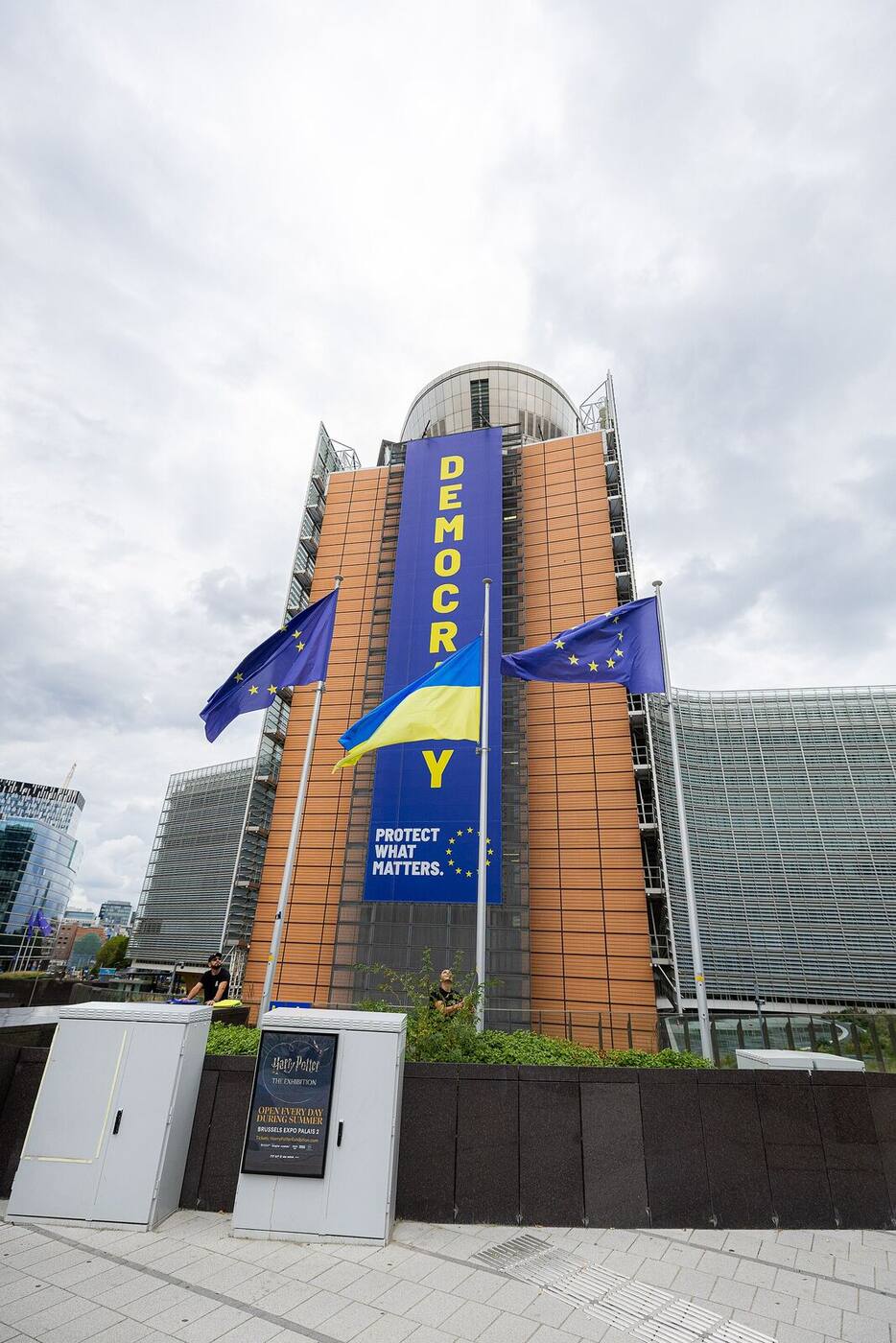
On 4 November the Commission adopted its annual Enlargement Package. For the first time, it attached indicative roadmaps to the reports on Montenegro, Albania, Moldova and Ukraine.[1] The roadmaps are annexed to the Communication on enlargement policy (COM(2026) 690). They run a year ahead and set out half-yearly lists of chapters that the Commission thinks can be provisionally closed.[2][3] The Commission presents them as "living documents" that prejudge neither the outcome nor the pace of negotiations.[2] We read them as a public test of whether the Council will move at the speed the Commission says the candidates have earned.
What the four timetables actually say
Montenegro's roadmap is the only one that reaches the finish line. The Commission considers that Podgorica has met all closing benchmarks. It will send the remaining draft EU common positions to the Council by mid-November.[3] Five chapters are pencilled in for the November intergovernmental conference and nine for December. The December list includes judiciary and fundamental rights and justice, freedom and security.[3][4] The draft accession treaty would be completed in spring 2027 and signed in June 2027. Signature would follow a Commission opinion, Parliament's consent and a Council decision on admission.[3] Commissioner Kos called Montenegro the "frontrunner among frontrunners" and has spoken of membership in 2028.[5][10] Member States closed chapters 1 and 12 at the conference of 6 November. That brings the total to 23 of 33.[8]
Albania is roughly a year behind. Thirty-one chapters remain. The roadmap schedules six closures in the rest of 2026, ten in the first half of 2027 and the remaining fifteen in the second half. Chapters 23 and 24 are in that last group.[3] The Commission calls Tirana's end-2027 target ambitious but achievable. It asks the Council to begin drafting the treaty during 2027.[3] A senior official put it plainly: by the end of 2027 Albania could be where Montenegro is now.[7]
Moldova and Ukraine have roadmaps without an end date. Both still need clusters 4 and 5 opened. The Commission urges the accession conferences to open them by the end of 2026.[3] For Moldova, 25 chapters could close in 2027. That is consistent with the government's aim of early 2028.[3][4] For Ukraine the 2027 list has seven chapters. The first-half target is the rule-of-law interim benchmarks, and a new joint task force supports it.[3] The Commission records Kyiv's end-2028 objective. It says reform must accelerate for it to be met.[2]
What the EU side now owes
Every date in the roadmaps presupposes a unanimous Council decision. A signed treaty then goes to ratification in each member state.[3][16] Three pressure points are visible already.
The first is Hungary. Budapest withheld approval of the screening results for Ukraine's two remaining clusters at working-group meetings on 20 and 27 October. It lifted its objections to clusters 2 and 3 once Kyiv amended its minority-education law.[11][15] Ukraine's new envoy insists that no substantive objections remain and that the delay is about reviewing documentation.[11] Moldova has been coupled to Ukraine's file since 2022, so it is the collateral case. President Sandu said that "by blocking Moldova, no one is helping Ukraine". She aimed the words at Prime Minister Magyar's government.[12] Whether the Council decouples the two files is a decision for member states.[4]
The second is Croatia. Zagreb has listed eight open bilateral points with Montenegro. Six are attached to chapter 23, including compensation for Morinj camp detainees and 14 missing persons. Two are attached to chapter 31 and concern the Prevlaka border and the training ship Jadran.[13] Both chapters sit in the December column of Montenegro's roadmap.[3] Podgorica says compromises are within reach, and the Commission calls the timetable feasible.[13][7]
The third is the Union's own preparation. The pre-enlargement reviews of 6 October concluded that the EU can absorb new members through targeted adaptations inside the existing Treaties. The Commission proposed passerelle clauses towards qualified-majority voting in selected areas, QMV for opening clusters and intermediate steps in negotiations, and longer sectoral safeguards. It also proposed a new institutional safeguard that reaches as far as suspension of voting rights for serious breaches of Article 2 values.[9] These safeguards will be applied first in Montenegro's treaty, with a postponement clause as a last resort.[3] The 2028-2034 MFF proposal carries a revision mechanism that each accession triggers. The June 2026 Montenegro financial package is the model for bridging funding.[9] Gradual-integration dialogues begin in the first quarter of 2027. They cover energy, transport, digital and defence.[1][6]
The six left without a timetable
The package is blunt about the rest. Serbia made no substantive progress, and its CFSP alignment stands at 63 per cent. The Commission points to the Student List government elected on 25 October as a chance to reverse the trend.[7][14][1] North Macedonia has still not adopted the constitutional amendments it committed to in 2022, so cluster 1 stays shut.[1] The package describes Bosnia and Herzegovina as increasingly disengaging. A chief negotiator and two judicial laws are required before a first intergovernmental conference.[1][2] Kosovo emerges from institutional gridlock, with measures lifted and assistance resumed.[1] Türkiye remains a candidate on paper while the causes of the 2018 standstill persist. Georgia's process is de facto halted, and the Commission repeats that it is a "candidate country in name only".[1]
For the first generation born European, this is the first package in our adult lives to put dates on a 28th member. The open question is whether the Union we inherit can decide as fast as it asks others to reform.
What we would watch
- The December accession conference with Montenegro will show whether chapters 23 and 31 close with Croatia's eight points still live. It will also show whether the Council adopts the common positions the Commission sends by mid-November.[3][13]
- The European Council of December will show whether clusters 4 and 5 open for Ukraine and Moldova together, for Moldova alone, or for neither.[11][12]
- The first gradual-integration dialogues take place in early 2027. We will watch whether they go beyond a mapping exercise.[6]
- The roadmaps assume Council movement on the passerelle proposals and QMV for cluster openings, but they cannot deliver it.[9]
- Ratification arithmetic for a June 2027 signature starts with France. There, Article 88-5 of the Constitution makes a referendum the default route, unless each chamber adopts a motion by a three-fifths majority that sends the bill to Congress instead.[17]
Noti
Iċċita
Global Policy Centre, "The 2026 Enlargement Package: the roadmaps for Montenegro, Albania, Moldova and Ukraine", Génération Maastricht, 4 November 2026, https://generationmaastricht.org/research/roadmaps-for-four-2026-enlargement-package.
Kontenut relatat

European Sovereignty
The UK-EU summit of 19 May 2025: defence, fisheries and youth mobility


Enlargement & Candidate Countries