
Brief
COP31 in Antalya: five results for the EU delegation
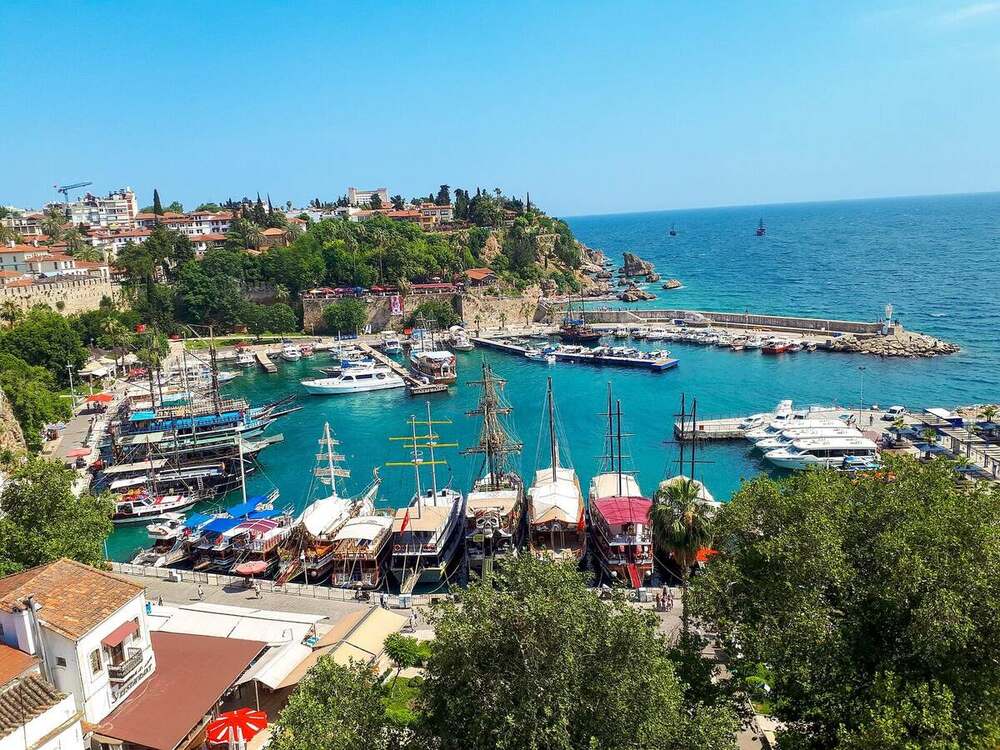
COP31 opens in Antalya on 9 November and runs until 20 November. Türkiye hosts the conference and Australia's Chris Bowen acts as "President of Negotiations".[1] The Council fixed the EU's negotiating position on 12 October. Its conclusions say the conference "must mark a step-change in the delivery and implementation of the Paris Agreement".[2] Belém produced a stocktake of promises. Antalya has to show that some of them bind. A European born in 2000 will be in mid-career when the second global stocktake concludes in 2028. The same European will be near retirement at the 2050 neutrality date. I measure the conference against that horizon. The delegation should bring home five results.
1. Put the fossil fuel transition back into a negotiated text
The Mutirão decision adopted in Belém on 22 November 2025 did not mention fossil fuels at all. The roadmap was pushed outside the formal process.[3] The Brazilian presidency published it on 3 November as a voluntary "collective agenda" in three phases from 2028 to 2033. André Corrêa do Lago has been explicit: "We are not suggesting negotiations."[4] At Bonn in June, Switzerland for the Environmental Integrity Group and the small island states asked for the roadmap to be brought into the formal process. The Arab group and the like-minded developing countries did not speak.[5] The EU's own mandate reaffirms "transitioning away from fossil fuels in a just, orderly and equitable manner". It asks COP31 to set the direction for the second global stocktake.[6] The delegation should use that mandate to anchor the roadmap in the decision launching the stocktake. The same decision should anchor the Santa Marta outcomes of April 2026, namely 57 countries and a second conference in early 2027 co-hosted by Ireland and Tuvalu.[7] A presidency electrification initiative that does not specify clean sources is no substitute.[4]
2. Turn the EU's own range into a number
The EU submitted its NDC on 5 November 2025 with an indicative 2035 target of 66.25 to 72.5 per cent below 1990, pending the 2040 law.[8] That law now exists. Parliament approved the 90 per cent net target by 413 votes to 226 on 10 February 2026, and the Council gave its final approval on 5 March.[9][10] The range was a placeholder for a legislative process that is now complete. The UNFCCC synthesis of 27 October finds that new NDCs leave global emissions only 6 per cent below 2019 levels by 2035, "substantially off track from the reductions required by the science".[11] A delegation that asks other major emitters to tighten their plans should arrive with a single 2035 figure at the top of its own range. It should also be candid that up to 5 percentage points of the 2040 effort may come from international credits from 2036.[9] That makes Article 6 integrity a European interest. Bonn ended without agreement on how to fund the Article 6.2 infrastructure.[12]
3. Make the 300 billion credible before chasing 1.3 trillion
Finance ministers restated on 9 October the EU's commitment to the new collective quantified goal of at least 300 billion dollars a year by 2035. They noted the Baku-to-Belém roadmap towards 1.3 trillion and insisted on broadening the contributor base.[13] The EU and its member states provided 32.3 billion euros of public climate finance in 2025 and mobilised a further 9.3 billion of private finance.[14] Belém called for tripling adaptation finance by 2035 but dropped the baseline year. The Mutirão text only "takes note" of the roadmap.[3] In Bonn the G77 and China rejected the co-chairs' plan for the two-year finance work programme over Article 9.1. The provisional COP31 agenda circulated on 7 September contains no Article 9 item at all.[5][15] The delegation should accept a defined baseline for the adaptation tripling and a transparent track for Article 9.1. Young Europeans will pay for the 2035 goal. They are entitled to know what it is measured against.
4. Finish the adaptation indicators instead of parking them again
Belém adopted 59 adaptation indicators under the global goal on adaptation. An annex states that they "do not create new financial obligations or commitments". The EU was among those unable to support the text.[3] In June the item left Bonn under rule 16 with no agreed text. The split is procedural. The EU and Brazil want the taskforce on data and methodologies expert-driven, while the Arab group and others want it party-driven.[5] The Council conclusions reaffirm the UAE framework and single out early-warning systems for island and least developed states.[6] A second deferral would leave the indicators without a methodology when the two-year Belém-Addis vision reports. The delegation should concede on form and win on substance. A hybrid taskforce is the concession. A fixed timetable is the prize.
5. Convert loss and damage pledges into cash, and adopt the just transition mechanism
The Fund for responding to Loss and Damage reports 822.71 million dollars pledged as at 31 July 2026, with around 486 million received and 25 contribution agreements signed. Its Barbados Implementation Modalities window has been raised to 342 million dollars, against a pipeline of 176 requests worth about 2.8 billion. The first "starter package" of approvals is due only at the Board's December meeting. The first replenishment cycle begins in 2027.[16] The Council welcomes the Fund's progress, including the allocation floor for small island and least developed states.[13] A welcome is not a payment. Every EU pledge should be converted before December, with an early signal on the 2027 replenishment. On just transition, Bonn produced a list of items for developing the Belém Action Mechanism. It invited the co-chairs to keep working so that the mechanism can be adopted in Antalya.[5] The Council asks Parties to "operationalise the Just Transition Mechanism".[6] That should happen in the first week. The last night is too late.
Commissioner Hoekstra has said that this COP must focus on "turning the commitments we have made into concrete progress".[14] For my generation the test is simpler. Antalya may close with a roadmap outside the text, a European range instead of a number, an adaptation goal without a baseline and a fund without disbursements. In that case the delegation will have kept the process alive and the inheritance unchanged.
Noten
Citeren
Pierre-Jean Clausse, "COP31 in Antalya: five results for the EU delegation", Génération Maastricht, 3 November 2026, https://generationmaastricht.org/research/cop31-under-30-checklist.
Verwante inhoud
COP Negotiations
The EU's 2035 and 2040 climate targets and its position at COP31

EU Climate Policy & the 2040 Target
The Commission's proposal to revise the EU Emissions Trading System for 2031 to 2040

EU Climate Policy & the 2040 Target